


 In February 2018, the award-winning author and historian Asterios Koukoudis "passed away" suddenly.
He himself, in his public will published in the Magistrates' Court of Thessaloniki, bequeathed to the Public Central Library of Veria the research material about Vlachs and the copyright on his books in Greek and English.
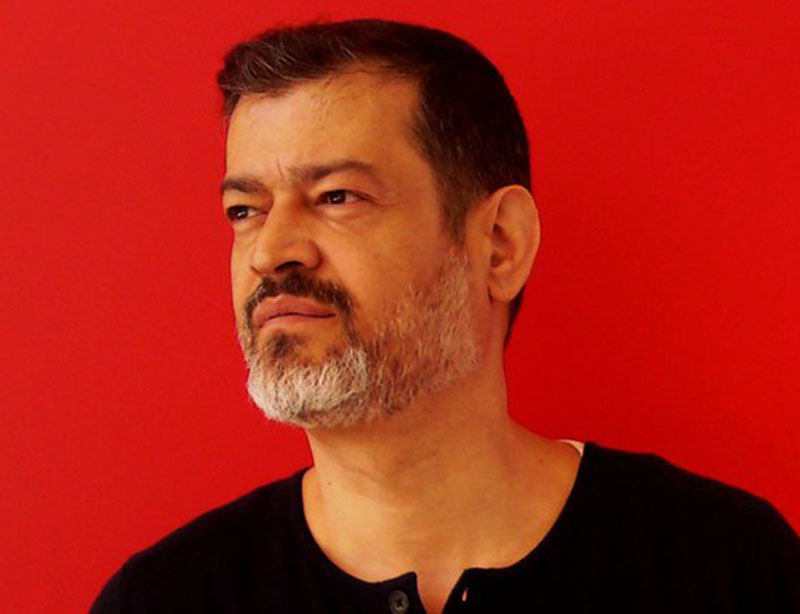 All the records and the copyrights from the books and writings of the historian Asterios Koukoudis are from now on at the Public Library of Veria, on his request which was emplemented after his early death. The Public Library of Veria has the obligation, after the acceptance of the inheritance, to staff a special research department about the Vlachs. The website vlachs.gr will remain active and will be updated under the supervision of Mr. Dimitris Koukoudis.
When I first took up the study of the Vlachs, my investigations were much more in the nature of a personal quest. I was looking for my own roots with the kind of curiosity anyone might feel about his or her ancestry. I eventually came to be more interested in the distant origins of the Vlachs themselves, having realised that, whatever those origins might be, they do not necessarily invest the Vlachs with a collective identity.
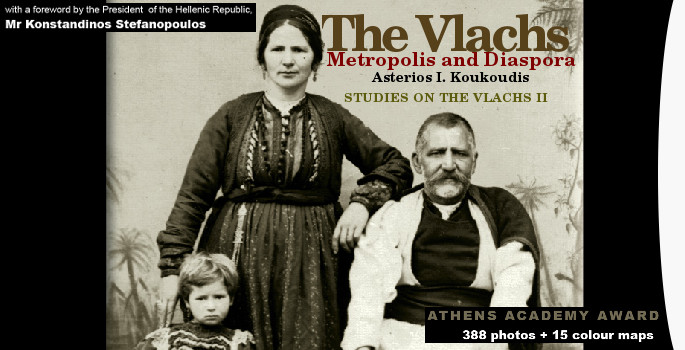
At first glance, Asterios Koukoudis’s Studies on the Vlachs is a huge index of all the Vlach villages in the southern Balkans, an index that includes a historical review of the ancestral Vlach villages and a lengthier account of the history of the Vlach villages in Central Macedonia. In order to amass this vast quantity of material, Mr Koukoudis worked not only in libraries and archives, but with the Vlachs themselves. The sheer volume of material alone makes this work commendable; but its contribution to the history of the Vlachs is much greater.
When I used to go to my mother’s village in Roumlouki, I remember how my Grekos grandad, barba-Dziordzi, would ask me: ‘What are you, lad, a Romios or a Vlahos?’. And in Veria, my Vlach grandad, lala-Steryios, would ask me in Vlach: ‘Tse hi tini, Armin ia Grek?’ (What are you, an Aroumanian or a Grekos?). And, anxious not to disappoint either of them, I would give each the answer he wanted to hear. It was years later that I realised that they both wanted me to say the same thing, but each wanted to hear it in his own language.
 Ladies and gentlemen,
First of all allow me to thank you for your kind invitation to take part in the centenary proceedings of the Farcarotul Society. It is a great honour to travel so far to be with you, and a unique opportunity to present my views on the contemporary reality of the Vlachs of Greece.
I must, of course, make it clear that I am here tonight only to represent my own views and the results of my many years of research. I most certainly do not represent - and do not intend to present myself as a representative of – the Vlachs of Greece, and I say this in a spirit of respect for the Vlachs as a collective group.
The Life of the Vlachs at 1900
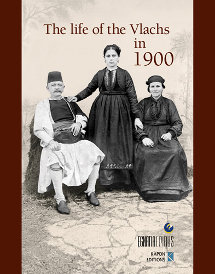
Photographic collection
Asteriou Koukoudi
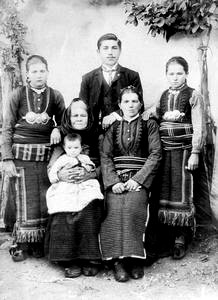
Subtracts from "The Vlachs: Metropolis and diaspora"
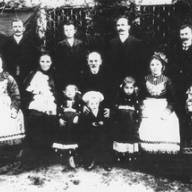
Migratory movements during the 19th century and until 1912
THE VLACHS: METROPOLIS AND DIASPORA VII. The Vlachs in north-western Macedonia 3.3.3. Migratory movements during the 19th century and until 1912 By around the mid-nineteenth century, the network of...
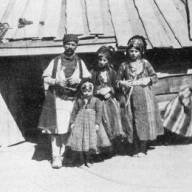
The diaspora and the colonies of the Grammoustian Vlachs
THE VLACHS: METROPOLIS AND DIASPORA VI. The Vlachs of Grammos 2.8.4. The diaspora and the colonies of the Grammoustian Vlachs It is worth mentioning, albeit briefly, the villages and the hut...
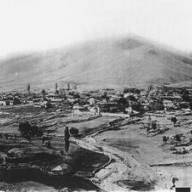
Moschopolis, the glory days, 1700–1769
THE VLACHS: METROPOLIS AND DIASPORA V. The Vlachs of Moschopolis and the surrounding area 3.2. Moschopolis, the glory days, 1700–1769 In the eighteenth century, Moschopolis and the local Vlach...
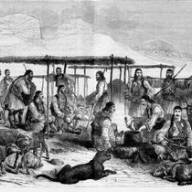
The Arvanitovlachs in Roumeli (Mainland Greece)
THE VLACHS: METROPOLIS AND DIASPORA IV. The Arvanitovlachs 7. The Arvanitovlachs in Roumeli (Mainland Greece) In around 1840, the large Arvanitovlach settlement at Bitsikopoulo was apparently...
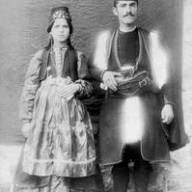
The Kupatshari
THE VLACHS: METROPOLIS AND DIASPORA III. The Vlachs of the Northern Pindos: The Vlach villages in the Grevena area 1.3. The Kupatshari Apart from the known Vlach villages, there is another distinct...
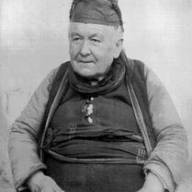
The debate about the former extent of Vlahozagoro
THE VLACHS: METROPOLIS AND DIASPORA II. The Vlachs of Zagori and Konitsa 3.2.2. The debate about the former extent of Vlahozagoro According to one out-dated view, the Vlach villages in Zagori were...
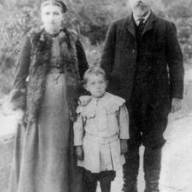
The Vlachs of Aspropotamos: The conditions and the agents of development
THE VLACHS: METROPOLIS AND DIASPORA I. The Vlachs of the Southern Pindos The Vlachs of Aspropotamos and Malakassi 7.1 The conditions and the agents of development The difficult circumstances of the...